
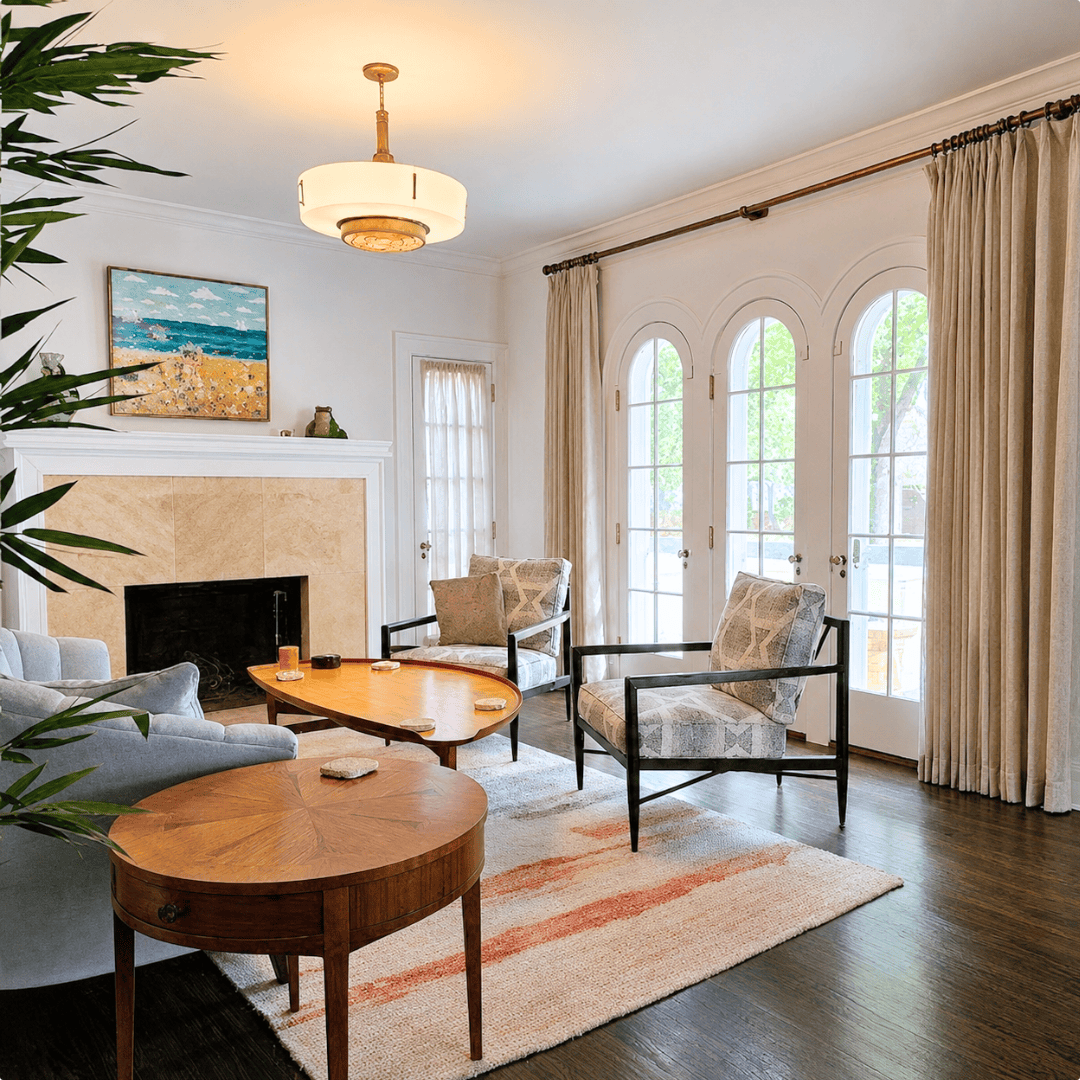
If your home no longer fits your life, you have two choices: move, or make the home fit. For many Central Florida homeowners, remodeling wins. You keep your neighborhood, your schools and your current mortgage, and in Florida you also keep a property tax cap that a new home won’t have. Moving makes sense when the problem is the location, not the house.
Key points
- Ask first whether the problem is the house or the location. You can fix a house. You can’t fix a location.
- Florida’s homestead cap limits how fast your home’s assessed value can rise. Buy a new home and the county reassesses it at full market value.
- Moving has its own costs, including Florida’s tax on the deed when you sell, and possibly giving up a lower mortgage rate.
- A properly specified, permitted remodel by a licensed contractor is how staying pays off.
How do I decide whether to remodel or move?
Start with what is actually wrong. If you love the area, the commute and the people around you, and the trouble is space, layout or a tired kitchen, those are building problems, and building problems can be solved. If you need a different school district, a shorter drive to work or to be nearer family, no remodel will fix that.
The quickest test is honest: list what you would miss if you left. If it is a long list, you are probably a stay. Jeremy’s free eight-question Love It Quiz works through exactly this, and he reviews every answer personally.
What does staying save a Florida homeowner?
More than most people expect, and some of it is written into Florida law.
Your property tax cap. Once your home has a homestead exemption, its assessed value can rise by no more than 3% a year, or by the rise in inflation if that is lower. This is the Save Our Homes limit. When a home is sold, the county reassesses it at full market value from the next January 1, so a buyer starts again without the cap you have built up. Part of your saving can move with you to another Florida home (“portability”), up to $500,000, but you have to apply for it. Sources: Florida Department of Revenue; Orange County Property Appraiser.
The tax on selling. Florida charges documentary stamp tax on the deed when a home is sold: 70 cents for every $100 of the price in Central Florida. Source: Florida Statutes, section 201.02.
Your mortgage rate. If you locked in a lower rate than today’s, moving means giving it up and borrowing again at the current rate. Freddie Mac publishes the national average every week, so you can check today’s figure against your own.
The life you have built. The school that works, the doctor you trust, the neighbors who know your name. None of it has a price tag, and none of it comes with a new house.
When does moving make more sense?
When the house can’t give you what you need, or the location is the problem. Moving may be the better call if you need a different school district or commute, if your lot won’t take the space you need, or if the work required would cost more than you are comfortable putting into this home. If renovation isn’t the answer, Jeremy will say so. That’s the point of an honest walk-through.
Can I add space without moving?
Often, yes. Converting space you already have, such as a garage, is one of the most practical ways to add a guest suite, a home office or a place for family to stay, without buying a bigger house. On a project like this, check whether you need a permit before any work starts. In a historic area such as parts of Winter Park, take extra care and speak to the city first.
A real example: the Berkshire Project in Winter Park
The Berkshire Project is a 1925 Spanish Revival home in Winter Park. It was bought sight-unseen in December 2022 and, over eight months, taken back to the studs and rebuilt: structural repairs, full systems, and a careful restoration of the details that make a home of that age worth keeping. The garage was converted into an accessory dwelling unit. Jeremy managed every stage personally.
The result reads as its original era from the street and lives like a modern home inside. It shows what investing in a home you love can do, even a home that is a hundred years old.
See the full project: the Berkshire Project and how historic restoration works.
What makes a remodel worth staying for?
A proper specification. What decides the outcome is not shaving pennies off the job but doing it right: the right materials, the right trades and the right permits. Before you hire anyone:
- Check the license. Florida contractors must be licensed. You can check any license on the state’s DBPR website. Property Fixology of Florida LLC holds Certified Residential Contractor license CRC1336073.
- Look into permits. Most remodels beyond cosmetic work need them, so check with your city or county before work starts.
- Compare what quotes include, not just the totals. Permits, demolition and making good are the usual gaps.
- Look at finished work. See the portfolio.
Frequently asked questions
Is it cheaper to remodel or move in Florida?
It depends on the job and the home, but staying avoids several costs that only moving brings: the documentary stamp tax on the sale, agents’ and closing costs, and a new home’s property tax assessment at full market value. Compare those against a properly specified quote for the work you need.
Will I lose my homestead cap if I move?
The cap stays with the home, not with you. A new home is assessed at full market value. Florida’s portability rules let you carry part of your saving, up to $500,000, to a new Florida homestead, but you must apply for it.
Do I need a permit to convert my garage?
Check before you start. Changing how a building is used is the kind of work that usually needs one. In a historic area such as parts of Winter Park, take extra care and speak to the city first.
How do I know if my home is worth remodeling?
If you love the location and the problems are space, layout or condition, it usually is. Take Jeremy’s Love It Quiz, or book a free walk-through and he will tell you honestly what is possible.
Which areas does Property Fixology cover?
Winter Park, Windermere, Winter Garden, Baldwin Park, College Park, Maitland, Heathrow, Longwood, Hamlin, Oakland and the surrounding Central Florida area.
Love it. Never list it.
Not sure yet? Take the Love It Quiz and Jeremy will send your personal verdict within 24 hours. Or start with a free walk-through: call 407-885-5935 or start your project.
Sources
- Florida Department of Revenue, Save Our Homes Assessment Limitation and Portability Transfer
- Orange County Property Appraiser, Portability FAQs
- Florida Statutes, section 201.02, Tax on deeds
- Florida Department of Revenue, Documentary Stamp Tax
- Freddie Mac, Primary Mortgage Market Survey
- Florida Building Commission, Florida Building Code
- Florida DBPR, License search
By Property Fixology, founded by Jeremy McVicker. Last reviewed: November 20, 2026.